Research Ethics Approval
In March 2026, this research received Research Ethics Board (REB) approval to examine how students make and explain decisions about AI use in online higher education. The study forms part of an ongoing Scholarship of Teaching and Learning (SoTL) research program exploring AI transparency, student agency, reflective practice, and learning-centred AI guidance.
Current Research
SoTL: AI Transparency and Student Agency
Current Status
- Research Ethics Board (REB) approved (March 2026)
- Phase 1 data collection completed (May 2026)
- Phase 1 qualitative data analysis completed (June–July 2026)
- Phase 1 manuscript submitted to the Canadian Journal for the Scholarship of Teaching and Learning (CJSoTL); initial editorial review completed and awaiting Co-Editor assignment (August 2026)
- Phase 2 implementation with enhanced AI guidance underway (Fall 2026)
Research Themes
- AI transparency statements in higher education
- Student agency and reflective decision-making
- Learning-centred AI guidance
- AI literacy and responsible AI use
- Scholarship of Teaching and Learning (SoTL)
Future Research
- Phase 2 data collection and analysis
- Comparative analysis of Phase 1 and Phase 2 findings
- Development and evaluation of faculty AI guidance resources
Manuscripts under review
- Chan, E. (Manuscript under review). From Compliance to Reflection: AI Transparency Statements as a Pedagogical Strategy Supporting Student Agency in Higher Education.
Conference Presentations
Chan, E. (2026, October 30–31). Leading Beyond AI Compliance: Reimagining Student Agency Through Reflective Assessment [Paper presentation]. Centre for Leadership & Diversity 7th Annual International Conference, Ontario Institute for Studies in Education (OISE), University of Toronto, Toronto, ON, Canada.
Research-Informed Open Scholarship
Chan, E. (2026). The AI Guidance Gap: Teaching, Learning, and Trust When Answers Are Everywhere. eCampusOntario Pressbooks.
This open, practice-informed book extends the broader questions emerging from my work in AI literacy, teaching and learning practice, and ongoing SoTL inquiry. It examines the AI Guidance Gap across students, faculty, and institutions and introduces an emerging framework of Clarity → Transparency → Reflection → Judgment → Trust.
The book also documents the transition from Phase I to Phase II of my SoTL work, including the move from broader AI guidance toward course- and assignment-specific guidance. It does not report Phase II findings; the Phase II research and analysis are ongoing.
Institutional Features & Official Media
Official SoTL Project Abstract. George Brown Polytechnic SoTL Projects Repository
Read the institutional project overview, methodological scope, and preliminary outcomes hosted by the Teaching and Learning Exchange (TLX).
Featured SoTL Spotlight Video: From Compliance to Reflection: Rethinking AI Transparency Video Spotlight
Watch the video presentation detailing findings from the REB-approved study, featuring an applied demonstration of AI transparency and reflective disclosure.

UNIVERSITY OF WATERLOO TEACHING & LEARNING CONFERENCE

From Urgency to Intention: Practical Approaches to Ethical AI Use in Teaching and Learning
Presented practical approaches to student-facing AI guidance, transparency, and low-overload course design. This session focused on supporting faculty in integrating AI in ways that maintain learning integrity and student agency.
University of Guelph Teaching & Learning Innovations

From Urgency to Intention: Creating the Conditions for Ethical AI Use in Teaching and Learning
Artificial intelligence is reshaping teaching and learning, yet many educators are still navigating how to respond. This session reframes AI as a course design issue rather than a technical problem, focusing on how clarity, transparency, and intentional decisions can support ethical AI use.
Drawing on practice-based work with faculty, it highlights simple, adaptable strategies such as clear AI guidance, reflection-based assessment, and approaches that move beyond all-or-nothing thinking. The focus is on creating learning environments that support engagement, trust, and student responsibility.
EvolvED Conference
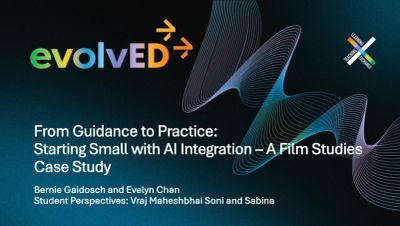
From Guidance to Practice: Starting Small with AI Integration – A Film Studies Case Study
This panel presentation explored how students responded when AI expectations became visible, discussable, and structured within an online Film Studies course at George Brown Polytechnic. Drawing on student reflections, faculty implementation, and lived classroom experience, the session examined how clear AI guidance shaped student engagement, transparency, and decision-making around authorship, creativity, and academic integrity.
The work contributes to an ongoing REB-approved Scholarship of Teaching and Learning (SoTL) study examining student agency and AI integration, while centering student perspectives and instructional clarity as foundations for reflective and intentional AI use.

STLHE Annual Conference (Hamilton, ON)
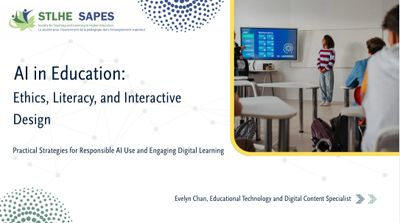
AI in Education: Ethics, Literacy, and Interactive Design
This session explores how educators can engage with AI in ways that are ethical, inclusive, and aligned with their teaching goals. Rather than focusing on tools, it reframes AI literacy as pedagogical decision-making, especially around when AI should not be used.
A practical framework and supporting resources are provided to help educators make intentional, transparent decisions about AI in their courses.
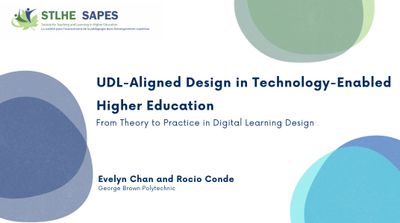
UDL-Aligned Design in Technology-Enabled Higher Education
This session demonstrates how UDL principles can be applied through interactive and multimedia design in higher education. Using practical examples such as scenario-based activities, escape rooms, and multimodal content, it highlights strategies for creating more accessible, flexible, and engaging learning experiences.
JDTAN 11th Annual Advancement in Education Summit 2026

Concurrent Session – AI in Education: Practical Applications, Human Judgment, and Responsible Use
This session builds on previous work exploring AI guidance, student experience, and AI literacy by focusing on practical implementation. Drawing together insights from earlier conference presentations, it demonstrates how educators can move from understanding ethical AI principles to creating clear, context-aware AI guidance for their own teaching practice. The session also introduces practical workflows and emerging AI tools that support responsible educational decision-making while reinforcing the importance of human judgment.
Event: Artificial Intelligence and Its Practical Application in Education
Host: Teaching and Learning Exchange, George Brown Polytechnic
Conference: JDTAN 11th Annual Advancement in Education Summit 2026
Date: July 10, 2026
Location: Toronto, Ontario, Canada
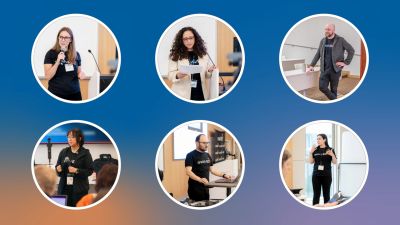
Closing Panel – Responsible AI in Education: Reflections and Future Directions
Following the concurrent sessions, I joined the closing panel with colleagues from George Brown Polytechnic to discuss responsible AI adoption, human judgment, accessibility, academic integrity, and institutional readiness. The discussion provided an opportunity to reflect on practical AI implementation across diverse educational contexts and respond to participant questions from throughout the summit.
Panelists
- Dr. Heidi Marsh
- Joanna Friend
- Ryan Morrison
- Evelyn Chan
- Rocio Conde
- Gian Michele Pileri